
This is a placeholder article — the real content will be written by the team in Putussibau. It's structured here to demonstrate how blog posts render.
If you've bought kratom at wholesale before, you've probably seen suppliers use the drying method as a marketing line. "Sun-dried" this, "indoor-cured" that. It's not marketing noise — the drying method genuinely reshapes the alkaloid profile of a finished batch, and if you're buying at scale it's worth understanding why.
What actually happens during drying
A fresh kratom leaf is about 70% water and packed with mitragynine, 7-hydroxymitragynine (7-HMG), paynantheine, corynantheidine, and around 50 other alkaloids in trace quantities. When you dry the leaf, you're not just removing water — you're changing the chemistry.
UV exposure drives oxidation reactions that convert mitragynine into 7-HMG and other derivatives. Higher temperatures speed that conversion. This is why sun-dried kratom generally reads higher on 7-HMG and lower on raw mitragynine — the conversion happened on the drying floor.
Indoor drying (white and some green)
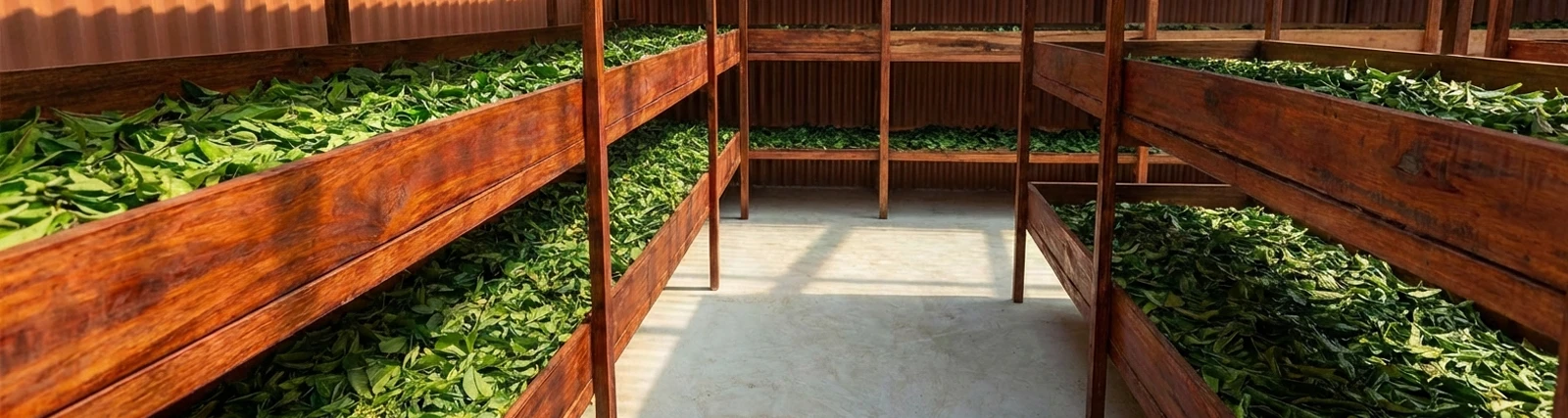
Younger leaves, harvested from the upper canopy, go straight into our indoor sheds. The space is ventilated but shaded — no direct UV, temperature held at 28–32°C, humidity around 60%. The goal is to remove water without letting the alkaloid profile drift. Mitragynine stays high; 7-HMG stays low. That's the characteristic white-vein signature.
Partial sun drying (standard green)
Mid-maturity leaves get split treatment: a few hours of morning sun on raised racks, then moved into the shed. Short UV exposure, no heat stress. The result is a more balanced profile — some conversion to 7-HMG, but not enough to shift the leaf's character toward a red.
Full sun / fermented (red, Bentuangie)
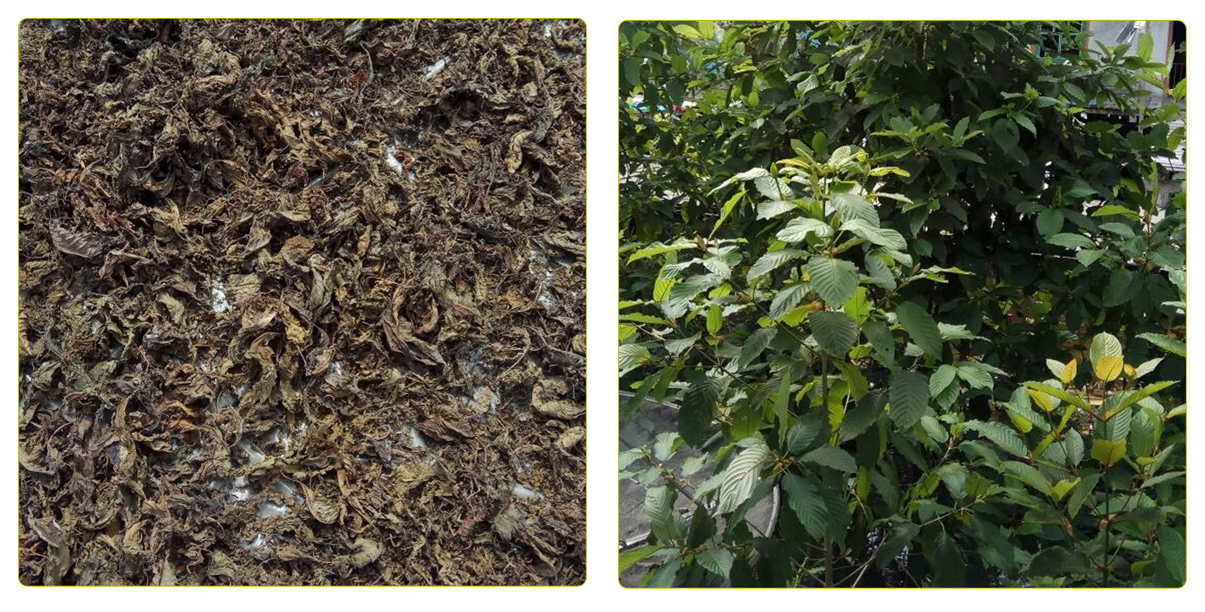
Mature leaves are laid on bamboo racks in open sun for 1–3 days, sometimes with an overnight fermentation step. The additional UV and microbial action pushes the alkaloid balance toward 7-HMG, which produces the characteristic red-vein effect profile.
The drying floor is where a grower earns — or loses — the character they sold you on the COA.
What to ask your supplier
If you're sourcing from a producer (as opposed to a trader), three questions will separate the ones who know what they're doing from the ones who just resell:
- Is your drying setup indoor, outdoor, or mixed — and does it change by strain?
- What's your target mitragynine-to-7-HMG ratio per vein colour?
- Do you test alkaloid content per batch, or per lot?
A real producer will answer all three without hesitation. A trader will pause, hedge, or tell you "we source from the best farms." If you get the second answer — ask different suppliers.
Why this matters for your customers
Your end market — whether retail, private-label, or distribution — is buying a specific experience profile. Consistent drying is what lets you promise that profile batch after batch. If your supplier can't describe their drying operation in specific terms, your customers will notice the variability, even if they can't name what's changed.
At Kratom Factory we run three separate drying lines — pure indoor, split, and sun — and assign leaf to the appropriate line the day it arrives from harvest. It's slower and takes more floor space, but it's the only way to keep the alkaloid profile inside the tolerance bands we print on our COAs.
Want to see the facility? We host distributor visits in Putussibau twice a year. Get in touch for dates.