
Our Story
Born in the Kapuas, built for the world.
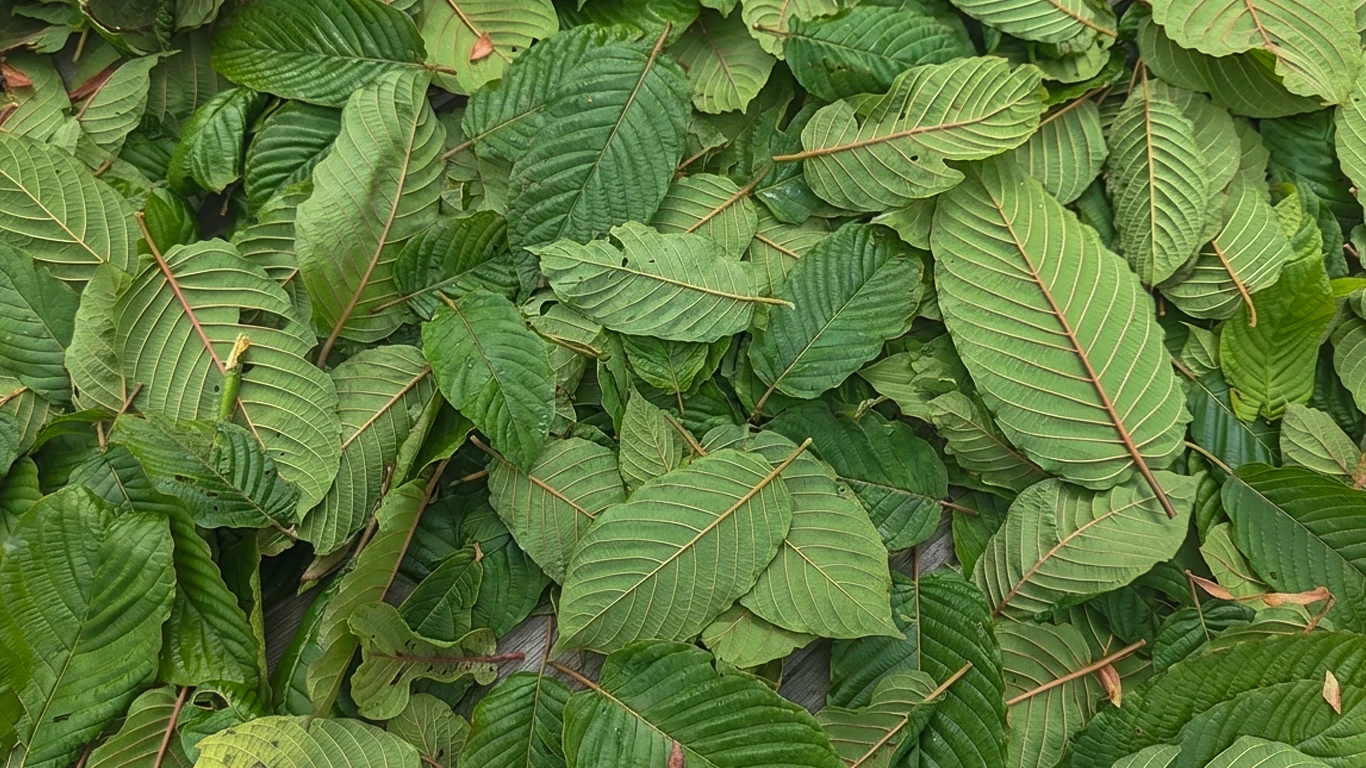
Kratom Factory is a Mitragyna speciosa producer, manufacturer and exporter based in one of the only places on earth where kratom grows native: the Kapuas Hulu regency of West Kalimantan, Indonesia. We work alongside local farming families and handle the processing, testing and shipping ourselves, with no resellers in between.
Origin
A producer working direct.
Kratom sold in Europe often changes hands several times before it reaches a wholesaler's pallet. Each layer adds cost, adds days, and blurs traceability. We keep things short instead.
Our founders are Indonesian, based permanently in Putussibau. We partner with local farmers on long-term contracts, run our own drying sheds and milling lines, and hold our own export license. The farmers grow and harvest the leaf; we process, test and export it, so a shipment goes from their trees to your pallet without a chain of middlemen, whether you buy in Europe or anywhere else in the world.
Location
Why Kapuas Hulu.
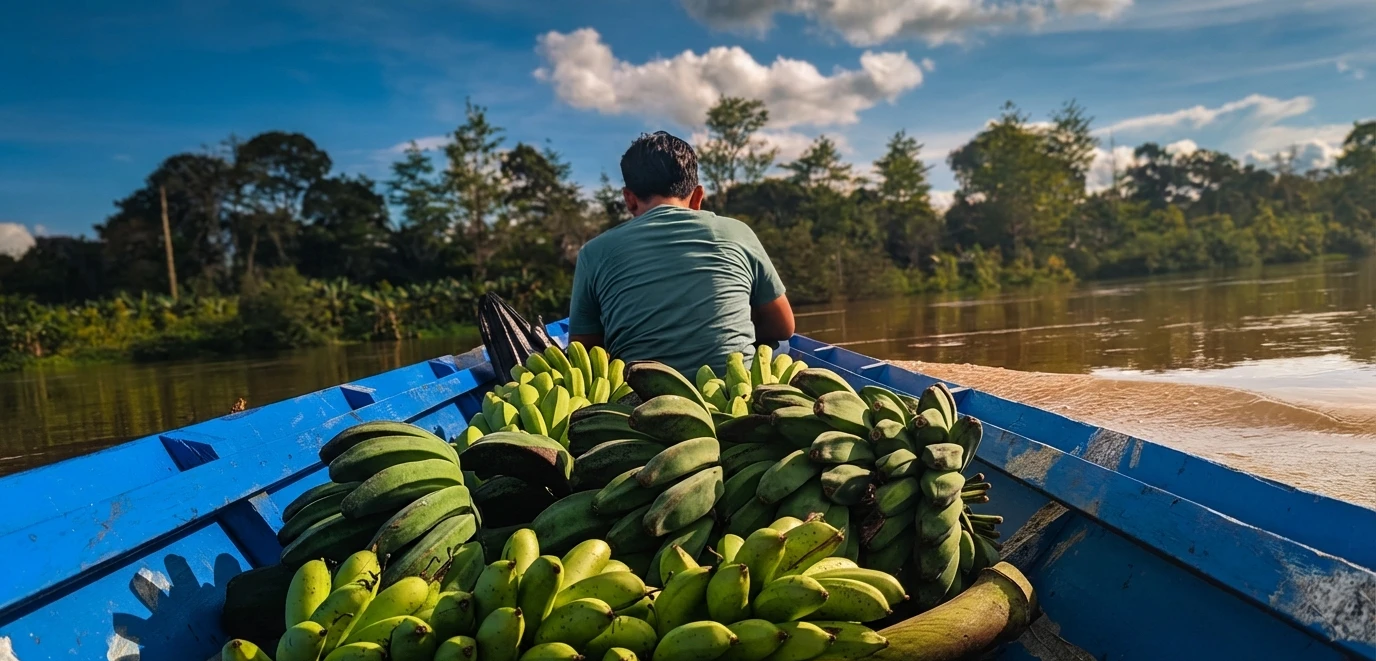
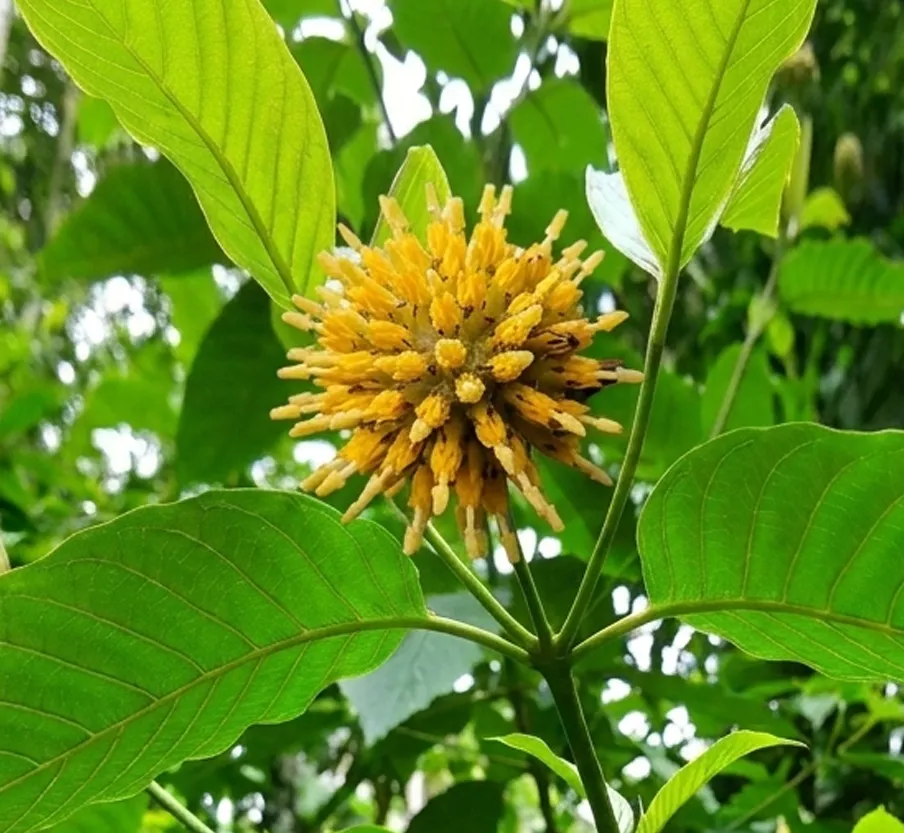
The Kapuas River is the longest river in Indonesia, with over 1,100 kilometres of rainforest corridor running through Kalimantan. Its basin is one of only two regions on earth where Mitragyna speciosa grows wild at commercial scale.
Mature trees here produce consistently higher mitragynine concentration than cultivated kratom from Thailand or Malaysia. The microclimate of sustained humidity, acidic alluvial soil and 2,500 mm annual rainfall is what gives our catalog its character.
Putussibau, where our facility sits, is the last major town before the Bornean interior. We ship via Pontianak and Jakarta to Rotterdam, Hamburg and Antwerp.
Our commitments
Growing more than kratom.
Sustainability isn't a marketing line for us; it's how the business stays alive. The Kapuas rainforest is under real pressure from palm oil and logging. Every hectare of kratom that stays productive is a hectare that isn't cleared for monoculture. Every family we work with is a family that isn't being recruited by extractive industry.
Reforestation programme
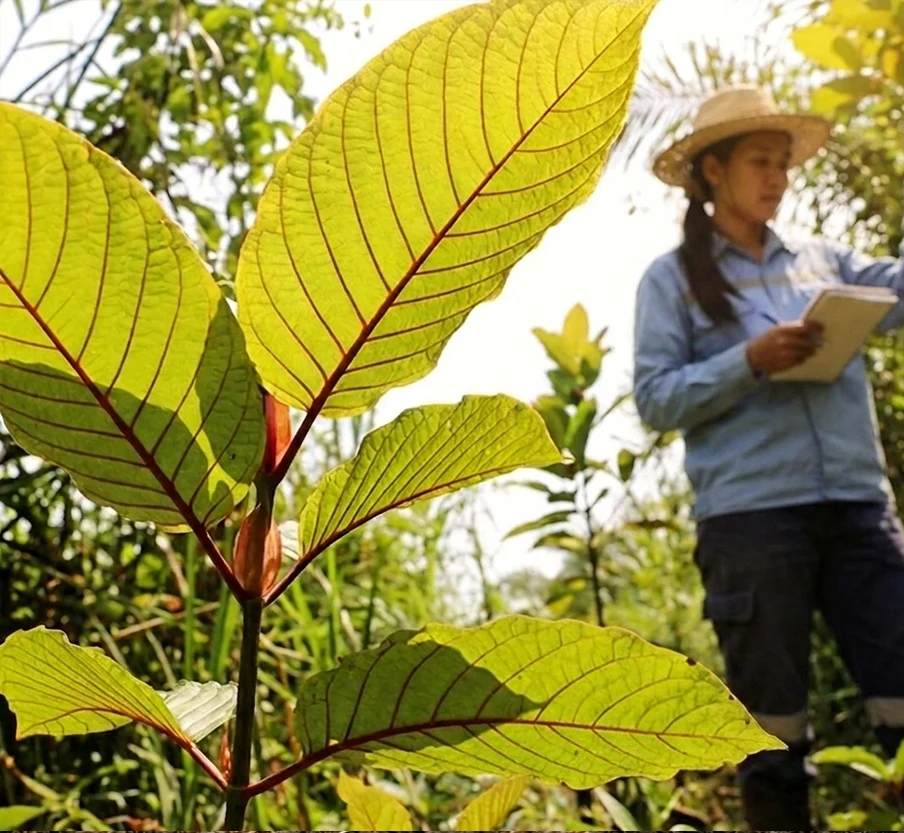
For every 10 kg shipped, one Mitragyna speciosa tree is planted in a degraded plot along the Kapuas. Counted, geo-tagged, verifiable.
Fair trade, direct
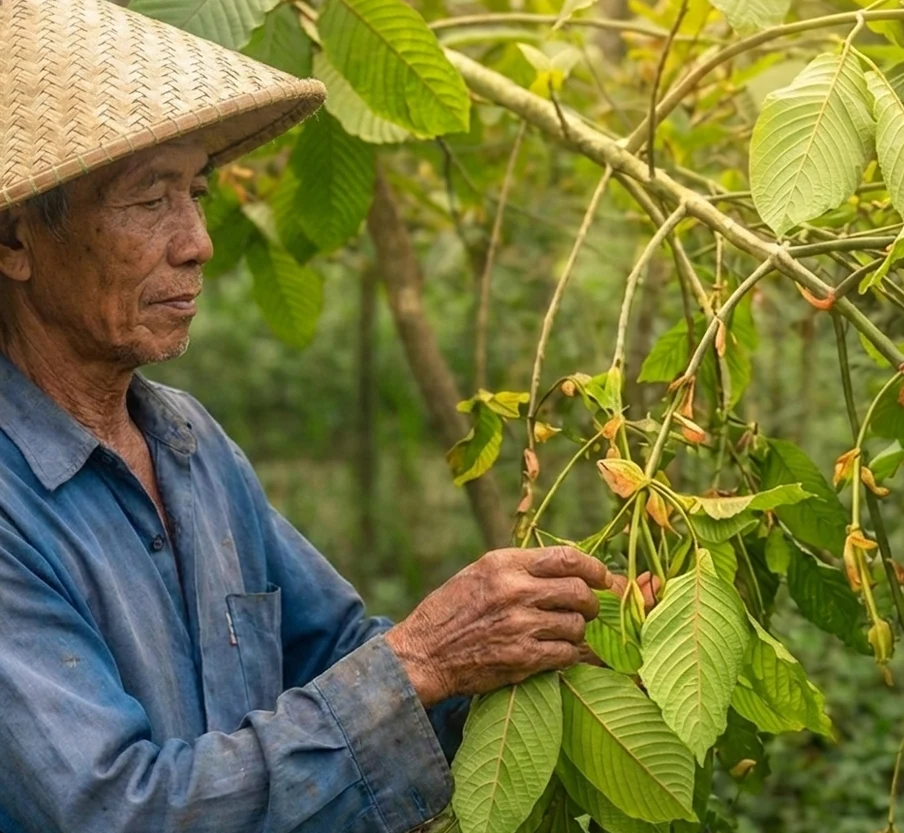
We pay farmers above the regional average, settle in 30 days or less, and guarantee purchase volume across the year, not just at harvest peak.
No clear-cut, no pesticide
Leaves are harvested by rotation from mature trees. No monoculture planting, no synthetic fertiliser, no pesticide use in the plots we source from.
Processing
Clean floors, calibrated mills.
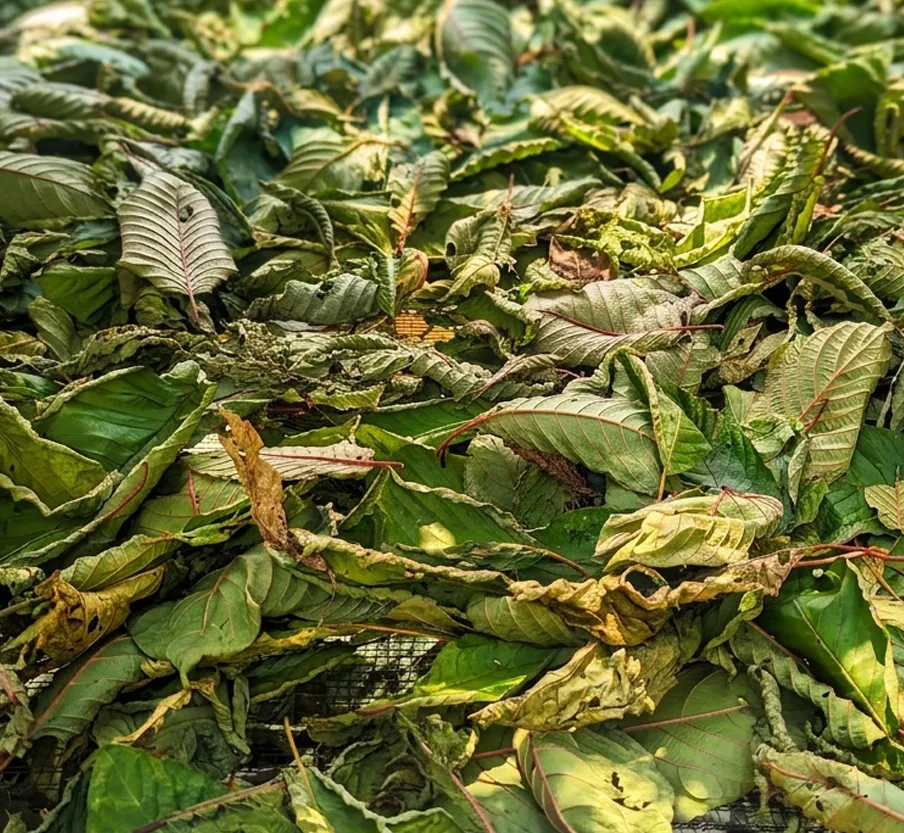
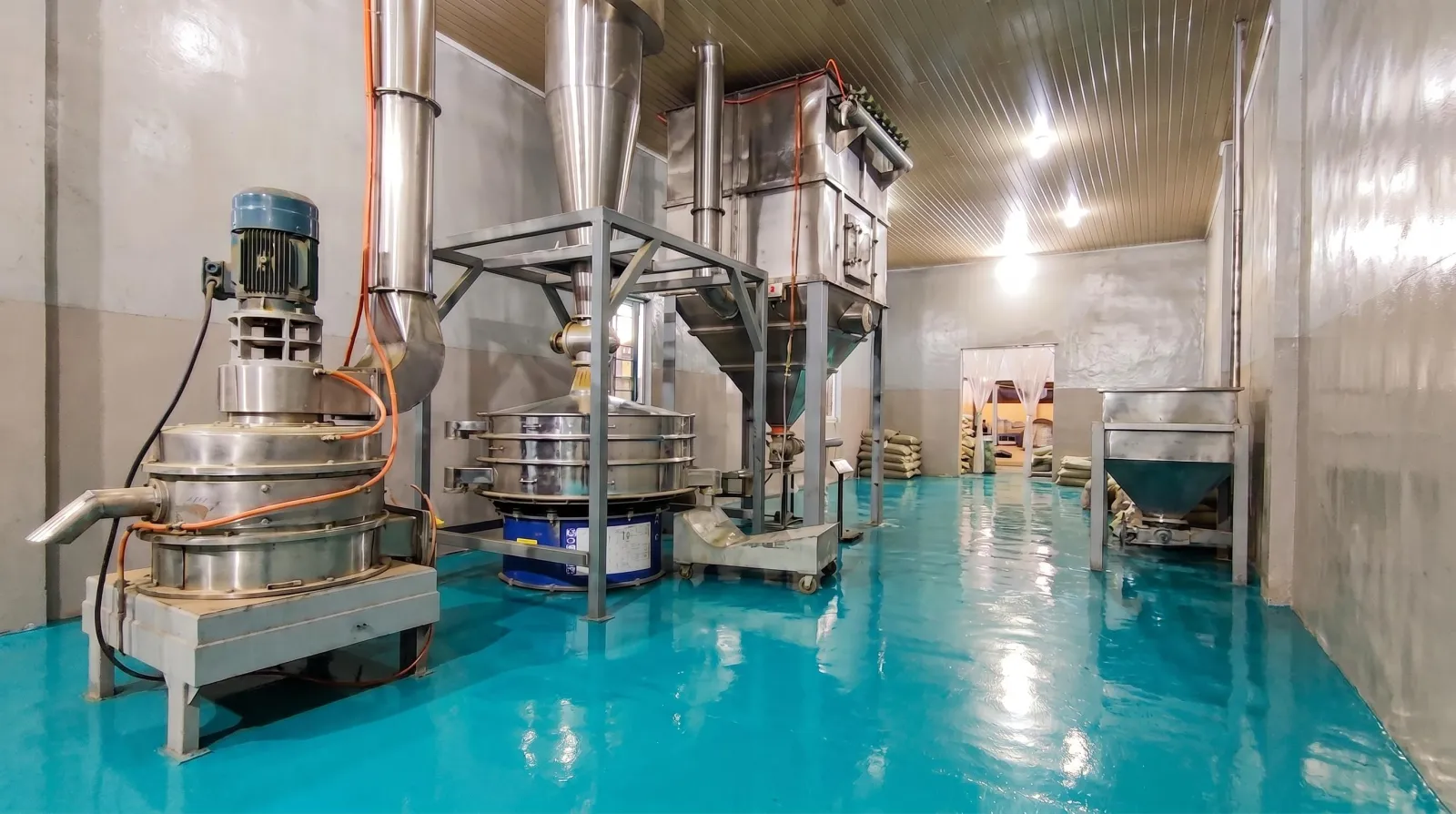
Our drying facility makes sure leaves are dried in controlled environments. Milling is done in a closed, sanitised production line at our Putussibau facilities. Contact surfaces are stainless steel and floors are epoxy-sealed. Operators work in dedicated clothing with gloves and hairnets.
Our grinders are industrial-grade and serviced on a fixed schedule, calibrated to deliver a consistent mesh powder batch after batch.
The full line operates to HACCP (Hazard Analysis and Critical Control Points) protocols, the same food-safety framework applied in European food production. Each batch is logged, sampled and traceable back to the drying bay it came from, which is what makes the lab testing step that follows meaningful.
Quality control
Every batch. Every time.
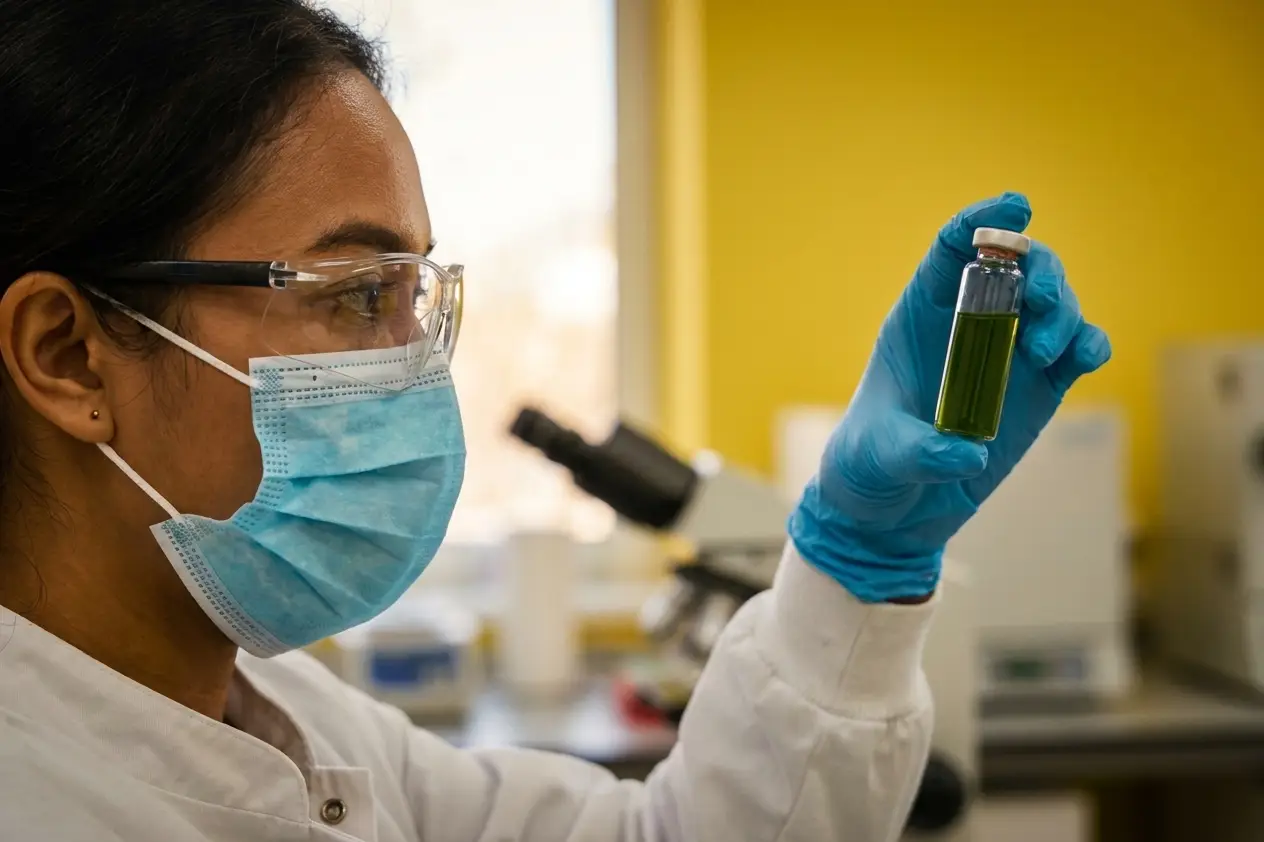
Before any lot leaves the facility, it is independently tested in Jakarta for: heavy metals (As, Pb, Cd, Hg), microbiological load (TPC, yeast & mould, Salmonella, E. coli), and alkaloid content (mitragynine, 7-HMG).
COAs are issued per batch and travel with the shipment, both as a PDF attached to your invoice and physically in the box. If a batch fails any threshold, it doesn't ship. Period.
See QA standards