
Last reviewed: June 2026 · Written by the Kratom Factory production team in Putussibau, Kapuas Hulu.
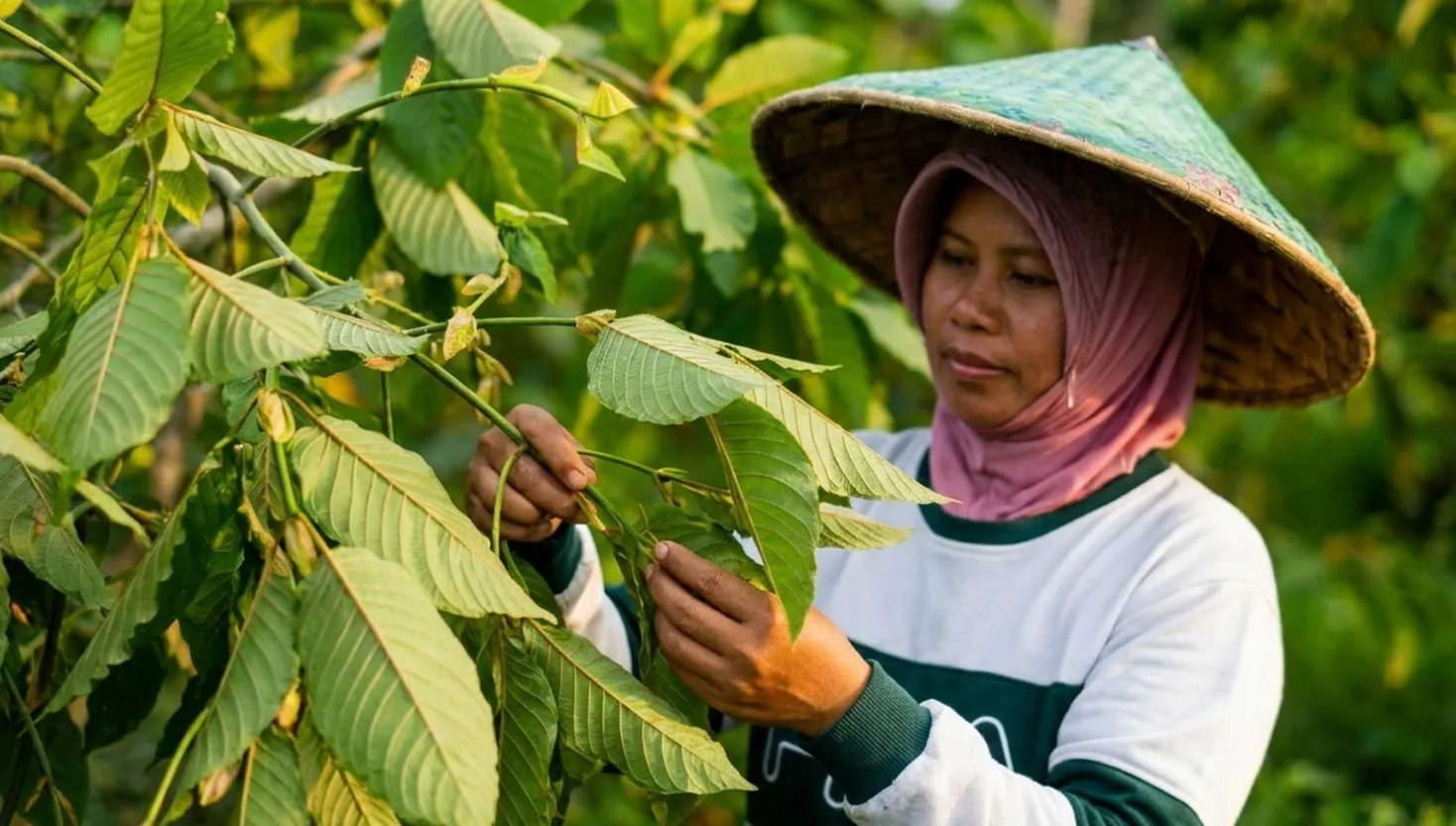
Two sacks of the same strain can leave two neighbouring farms in West Kalimantan looking identical and test completely differently in a lab. The leaf is rarely the reason. The drying floor is. How kratom is dried and processed after harvest sets its moisture, its microbial load, its heavy-metal exposure and how consistent its alkaloid content stays from one batch to the next. We run our own drying and milling facility in Kapuas Hulu, so for us this is not theory; it is the step we control most tightly. This guide explains how kratom is dried and processed, why the method changes the finished powder, how it too often goes wrong, and what a bulk buyer should verify before committing to a supplier.
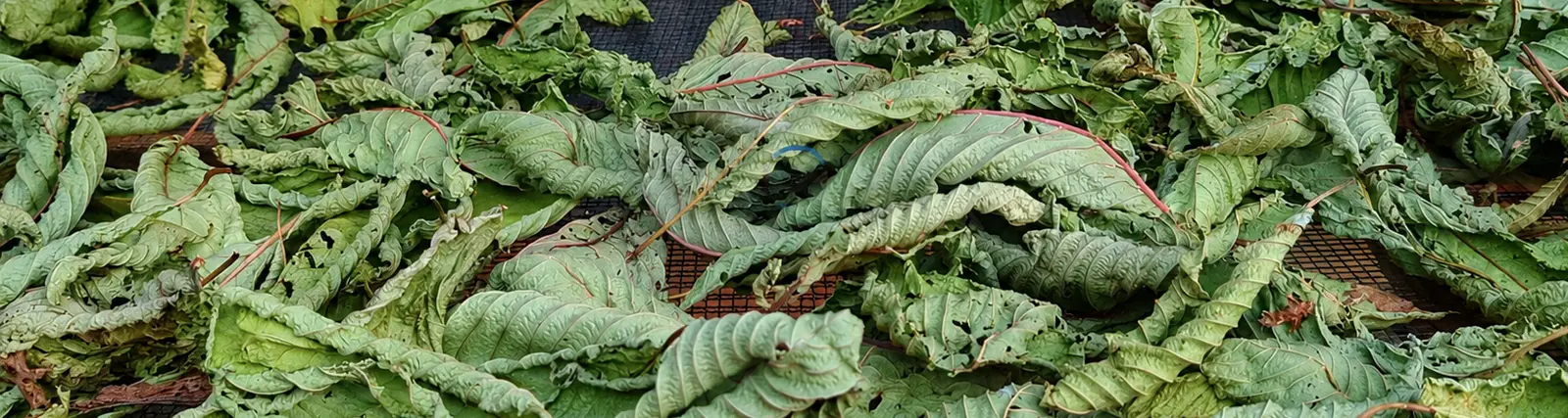
What happens to a kratom leaf when it dries
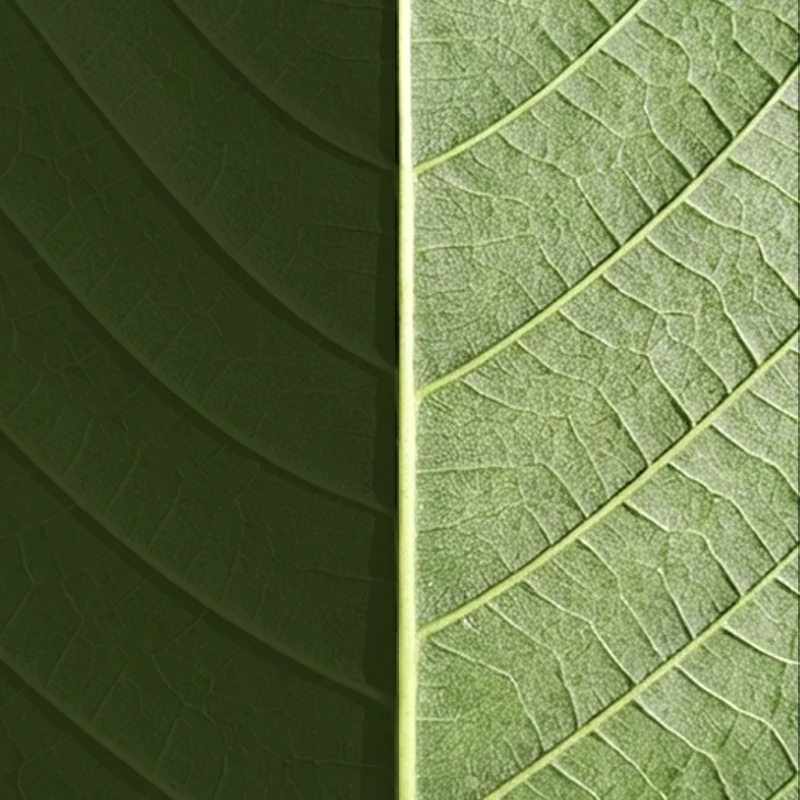
A fresh Mitragyna speciosa leaf is roughly 70% water. It also carries mitragynine, 7-hydroxymitragynine (7-OH), speciogynine, paynantheine and a long tail of minor alkaloids. Drying does two jobs at once. It pulls moisture down to a stable level so the material can be stored and shipped without spoiling, and it drives chemical changes in that alkaloid profile. Get the first job wrong and you ship mould risk. Get the second wrong and every lot reads differently, which is the last thing a private-label brand or distributor wants to explain to its own customers.
Two conditions do most of the work: light, specifically UV, and heat. UV exposure oxidises mitragynine and converts a share of it into 7-OH and related compounds. Heat speeds that conversion. So a leaf dried in open sun shows a different alkaloid ratio on a certificate of analysis than the same leaf dried in a shaded, ventilated shed, even if both came off the same tree on the same morning. This is chemistry a lab measures, not a statement about how the material is used.
Indoor, sun and fermented drying, and what each does
Commercial kratom is dried three broad ways. The choice is not cosmetic; it is what actually produces the vein categories buyers order by.
Shaded indoor drying (white and lighter greens)
Younger, upper-canopy leaves go straight into ventilated indoor sheds. No direct UV, temperature held around 28 to 32°C, humidity managed. The aim is to remove water while the alkaloid profile drifts as little as possible: mitragynine stays comparatively high, 7-OH stays low. That stable, high-mitragynine chemistry is the signature buyers associate with white-vein material.
Partial sun drying (standard greens)
Mid-maturity leaves get a few hours of morning sun on raised racks, then move indoors. Short, controlled UV nudges some mitragynine toward 7-OH without pushing the profile all the way to a red. The result is the balanced composition that defines a standard green.
Full sun and fermentation (reds and Bentuangie)
The most mature leaves are dried in open sun for one to three days, sometimes with a controlled fermentation step. More UV and microbial action shift the balance further toward 7-OH. That processing, not a different species or region, is what produces red-vein and Bentuangie material.
The takeaway for buyers
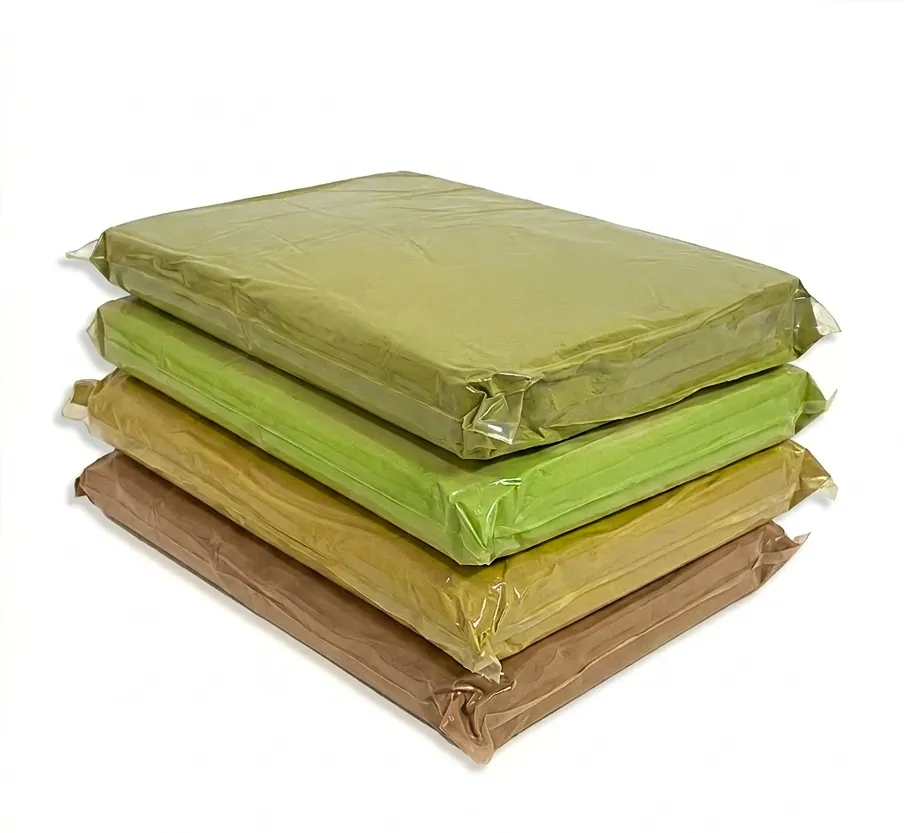
Vein colour is mostly a processing outcome, not a species or a location. A producer who can describe their drying protocol per vein can hold that profile lot after lot. One who cannot will send you inconsistent batches.
| Drying method | Leaf | Conditions | Effect on alkaloids | Typical result |
|---|---|---|---|---|
| Shaded indoor | Young, upper canopy | 28–32°C, no direct UV | Mitragynine high, 7-OH low | White / light green |
| Partial sun | Mid-maturity | Short morning UV, then indoors | Slight rise in 7-OH | Standard green |
| Full sun / fermented | Mature | 1–3 days open sun, optional ferment | 7-OH higher | Red / Bentuangie |
How kratom is too often dried, and why it ruins a batch
Here is the part of the supply chain most buyers never see. Across the region, a large share of kratom is still dried the cheapest way possible: raw leaf spread on tarpaulins or bare ground in the open, turned by hand, beside homes, yards and roads. It dries. It also collects everything around it.
A batch dried on the ground under uncontrolled sun picks up:
- Soil and dust, which carry the heavy metals such as lead and cadmium that later show up on a heavy-metals panel.
- Free-ranging animals. Chickens and dogs walking across drying leaf bring bacterial contamination such as E. coli and salmonella.
- Road dust and vehicle exhaust when leaf is dried on the verge, adding more heavy-metal and particulate load.
- Rain and dew with no cover, which spikes moisture back up, restarts microbial growth and invites mould and mycotoxins.
- Uneven UV and heat, so alkaloid content swings from one corner of the tarp to the next and no two sacks match.
What ground-drying puts on the COA
Heavy metals over limit, a high total plate count, yeast and mould, and in the worst cases salmonella: exactly the failures a European buyer's QA will catch, or worse, their customer will. It also means alkaloid content you cannot predict, so you cannot promise your market a consistent product.
This is not rare, and it is not a moral point. Ground-drying is simply the default when there is no facility, no floor, no humidity control and no reason to do better. It is also why "we source from the best farms" is not an answer to a serious quality question. Good leaf dried in the dirt is still a contaminated batch.
How we dry and process at our facility
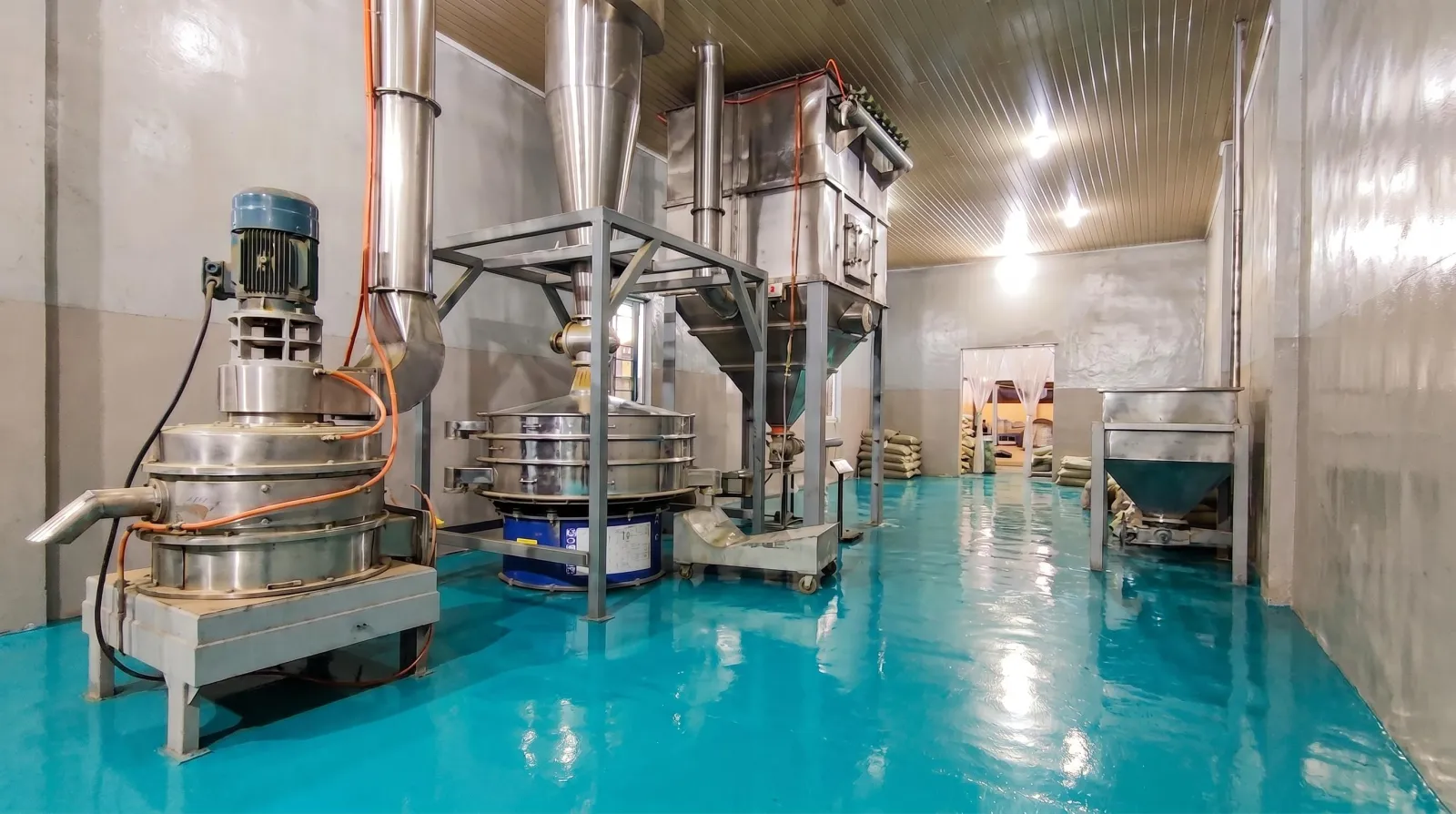
We handle drying and milling ourselves in Kapuas Hulu rather than buying dried leaf from collectors, for exactly the reasons above. In practice that means:
- Raised drying racks and dedicated shaded sheds, never bare ground or roadside.
- Temperature and humidity held in a set range, with leaf assigned a drying line by vein colour.
- Leaf graded on arrival and kept as single-origin lots, each with a batch number that runs from farm parcel to pallet.
- Material milled fresh against the order rather than warehoused, so moisture and freshness are controlled at dispatch.
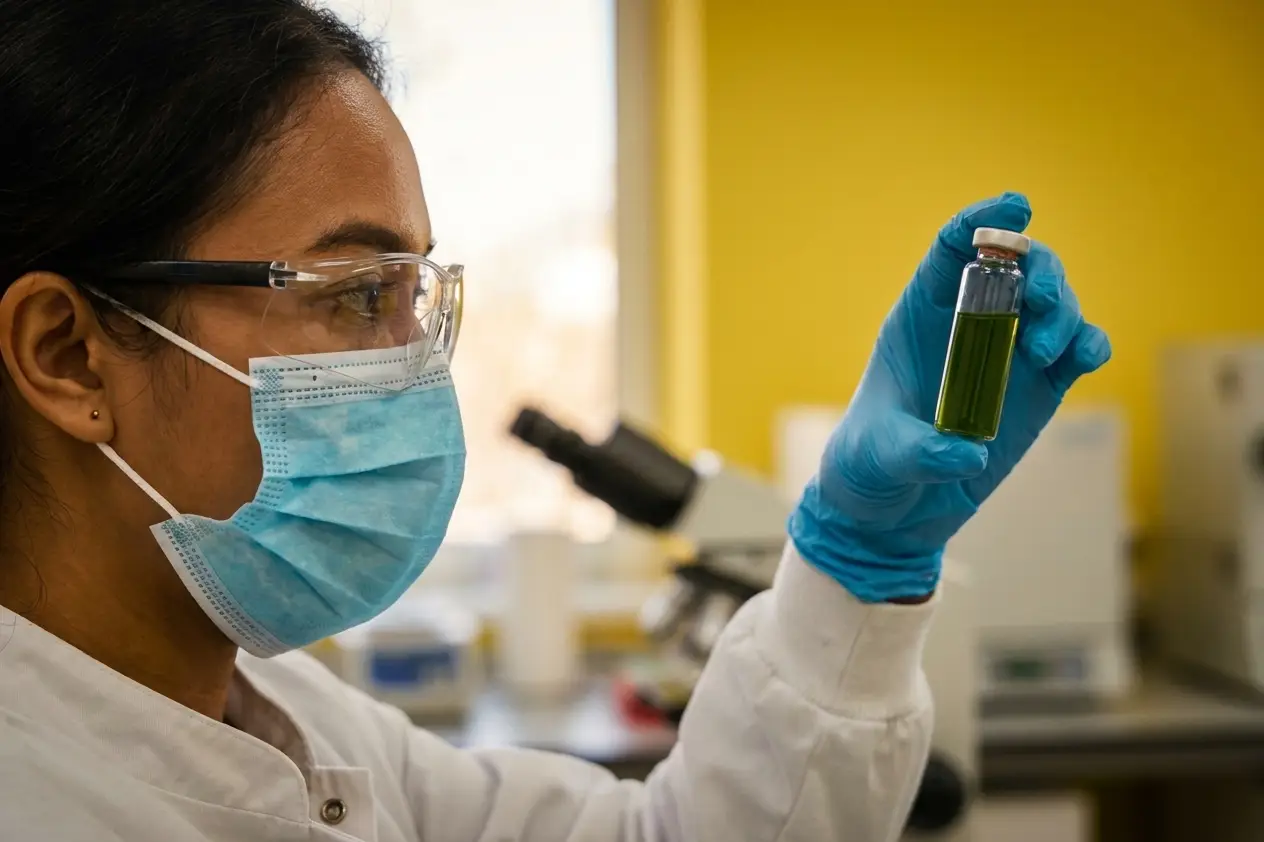
- One lab test per export covering heavy metals, microbiology and alkaloid content, with the COA in the box.
None of that is exotic. It is simply what "processed properly" looks like, and it is the difference between a COA you can hand to your customer and one you have to explain away.
The drying floor is where a grower earns, or loses, the character they sold you on the COA.
What consistent processing means for your batch
For a distributor or private-label brand, the payoff of controlled drying is reassuringly dull: the batch you approve is the batch you get again. Predictable moisture means a longer, safer shelf life at pallet scale. Controlled contamination means fewer failed inspections and no surprise recalls. Consistent alkaloid content means your product range and your customers' expectations hold from one order to the next. To a serious buyer, that predictability is worth more than any single impressive-looking lot.
What to ask any kratom supplier about processing
Three questions separate a producer from a trader who re-bags collector leaf:
- Is your drying indoor, outdoor or mixed, and does it change by vein colour? A real answer describes racks, sheds and conditions. A vague one means they do not control it.
- What alkaloid content do you target per vein, and do you hold it batch to batch? You want chemistry and tolerance bands, not adjectives.
- Do you test per lot or per shipment, and what does the panel cover? Heavy metals and microbiology, not just alkaloids. Ask to see a sample COA.
Answer all three specifically and you are probably talking to whoever actually dries the leaf. Hedge, and you are talking to a middleman, for whom the drying floor stays someone else's problem until it becomes yours.
Frequently asked questions
How is kratom dried?
Commercially, kratom is dried three ways: shaded indoor drying, partial sun on raised racks, and full sun or fermentation. Each controls light, heat and airflow differently, which sets the leaf's moisture and alkaloid profile. Controlled, off-the-ground drying is what keeps a batch clean and consistent.
Does the drying method change the alkaloid content?
Yes. UV light and heat convert some mitragynine into 7-hydroxymitragynine, so the same leaf dried in open sun versus a shaded shed shows a different alkaloid ratio on its certificate of analysis. This is a measured chemical difference, not a claim about use.
Why is drying kratom on the ground a problem?
Ground and tarp drying exposes leaf to soil, dust, animals and road pollution, introducing heavy metals, bacteria such as E. coli and salmonella, and mould. It also leaves moisture and alkaloid content uneven across the batch. It is the most common cause of a failed COA.
How can I tell if a kratom supplier processes properly?
Ask how and where they dry, whether conditions change by vein, and what their lab panel covers. Then ask for a recent COA showing heavy metals and microbiology, not just alkaloids. A producer who dries their own leaf answers specifically; a re-bagger deflects.
How long does it take to dry kratom?
It depends on the method. Shaded indoor drying runs several days under controlled temperature and humidity; full sun can take one to three days; fermented reds add time. Control matters more than speed: rushed, uncontrolled drying is what creates moisture and contamination problems.
Is sun-dried or indoor-dried kratom better for wholesale?
Neither is better in the abstract; they produce different profiles. What matters for a bulk buyer is that the method is deliberate, matched to the vein, and repeatable, so every lot matches the one you approved. You can compare our full range on the product page.
Drying is the least glamorous step in kratom production and the one that decides the most. If you are evaluating suppliers, treat the drying floor as the real test, and ask to see the COA that proves it.