
Last reviewed: June 2026 · Written by the Kratom Factory team in Putussibau.
If you already sell kratom, you know the leaf is rarely what goes wrong. The supplier is. A good spec on paper means nothing if the batch that lands on your dock fails a heavy-metals panel, or the COA in the box belongs to a different lot, or the contact who was so responsive before your transfer stops answering afterward. Choosing a kratom wholesale supplier in Europe is a risk-management exercise, not a shopping one, and the buyers who treat it that way are the ones who are not explaining a recall to their own customers a year later. This guide lays out a seven-point checklist for vetting a bulk kratom supplier, the red flags that should end a conversation, and how to run a low-cost trial before you commit real volume.
Why supplier choice is the real risk in bulk kratom
The product itself is standardised enough that most buyers can describe what they want: a vein category, a target alkaloid range, a clean microbiology and heavy-metals profile. What varies enormously is who you buy it from and whether that party can actually deliver the same thing twice. Contamination is the fear that keeps importers awake, and it has real precedent. Salmonella outbreaks have been traced back to Indonesian kratom. Heavy metals such as lead and nickel accumulate in the leaf from the soil it grows in. Mould follows any batch dried under a tarp in the rainy season. European buyers now test on arrival and refuse payment for batches that fail, which means a bad supplier does not just cost you a shipment, it costs you the working capital tied up in it.
The other half of the risk is commercial. A bulk kratom supplier who cannot handle EU customs, who ships without usable paperwork, or who quietly re-bags leaf bought from collectors, exposes you to seizures, delays and a product you cannot trace when a customer asks. The checklist below is built around those two failure modes: the batch that is unsafe, and the supplier who is unaccountable. Get both right and the rest is negotiation.
How to use this checklist
Treat it as a filter, not a scorecard. A supplier does not need a perfect answer to every point, but a producer-direct supplier that tests per lot and knows Europe should clear most of it comfortably. The ones who deflect on the first three criteria rarely improve on the rest.
The buyer's checklist: 7 criteria for a kratom wholesale supplier
1. Producer-direct, not a trader, aggregator or broker
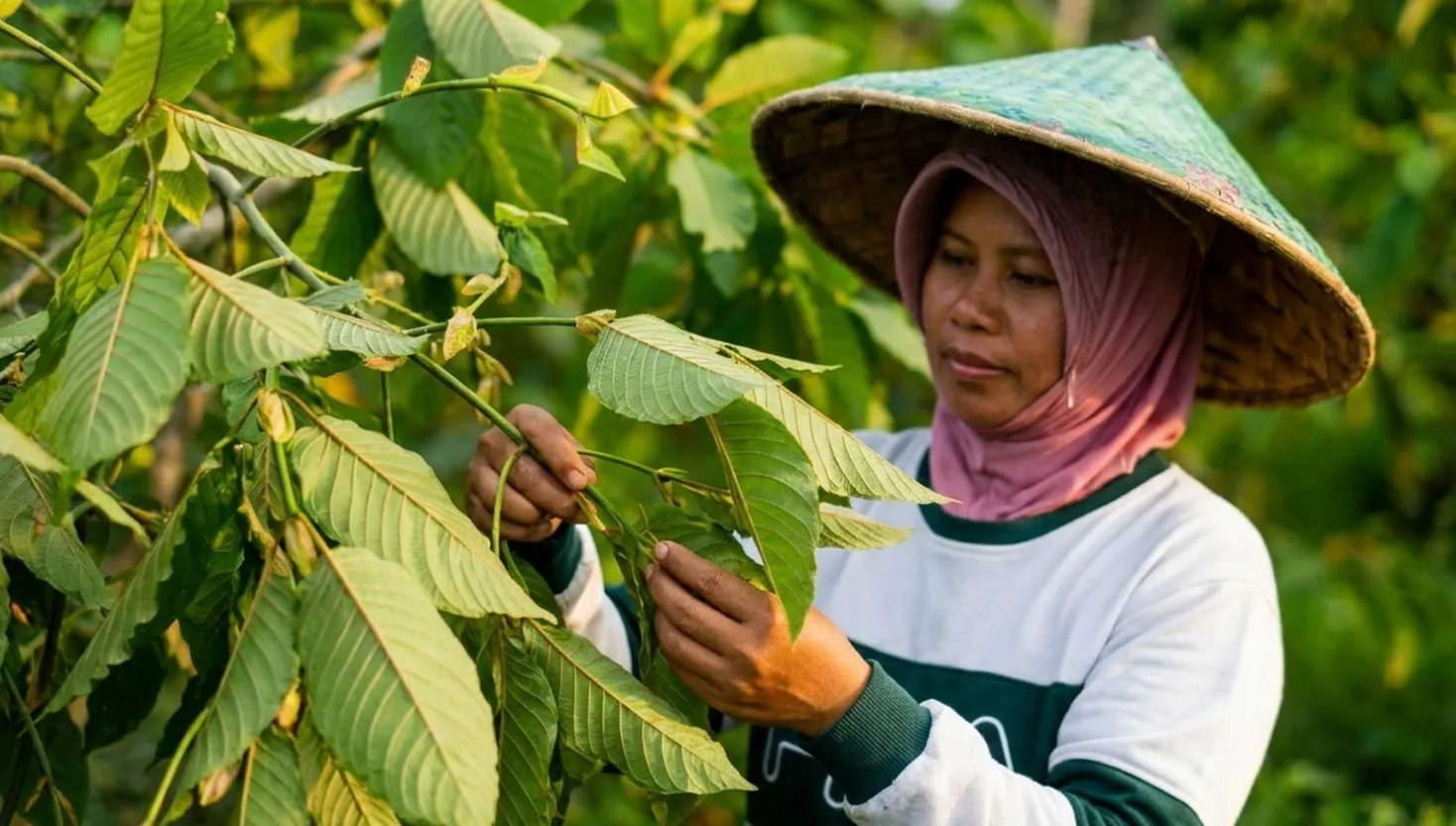
The first question is the one that decides most of the others: are you talking to whoever actually grows, dries and mills the leaf, or to a middleman who buys it in and sells it on? A producer controls the drying floor, holds the batch records, and can answer a technical question without phoning someone else. A trader-aggregator buys dried leaf from many collectors, blends it, and re-bags it under their own name, which is where traceability quietly dies. This is not a moral point, it is a control point. The economics and accountability of buying direct are worth understanding in detail, and we cover them separately in producer or broker, what buying direct changes. For the checklist, the test is simple: can they describe their own facility, and does the story hold up when you press on specifics.
2. A COA per lot from an accredited lab
Every serious supplier will say they are "lab tested." The distinction that matters is whether the certificate belongs to the actual lot you are buying, and whether the lab that issued it is accredited. A COA per lot, dated close to your shipment, from a named accredited laboratory, is the baseline. A single generic PDF reused across every order is not evidence, it is decoration. We break down exactly how to read one, line by line, in reading a kratom COA, so we will not re-argue it here. On the checklist, the requirement is short: a current, lot-specific COA from an accredited lab, offered before you ask twice.
3. Full traceability and no re-bagging
Traceability means a batch number that runs from a known origin through to the pallet on your dock, with nothing swapped or blended in between. When leaf is bought from collectors, pooled and re-bagged, that chain breaks, and a "single origin" claim becomes unverifiable. Ask how a lot is identified, whether it stays as a discrete lot from farm to export, and whether anything is combined along the way. A producer running single-origin lots direct from the farm can walk you back up the chain. A re-bagger changes the subject. Traceability is also your insurance: when a customer flags a problem, you want to isolate one batch, not recall everything you have ever sold.
4. Contamination controls: heavy metals, microbiology, drying
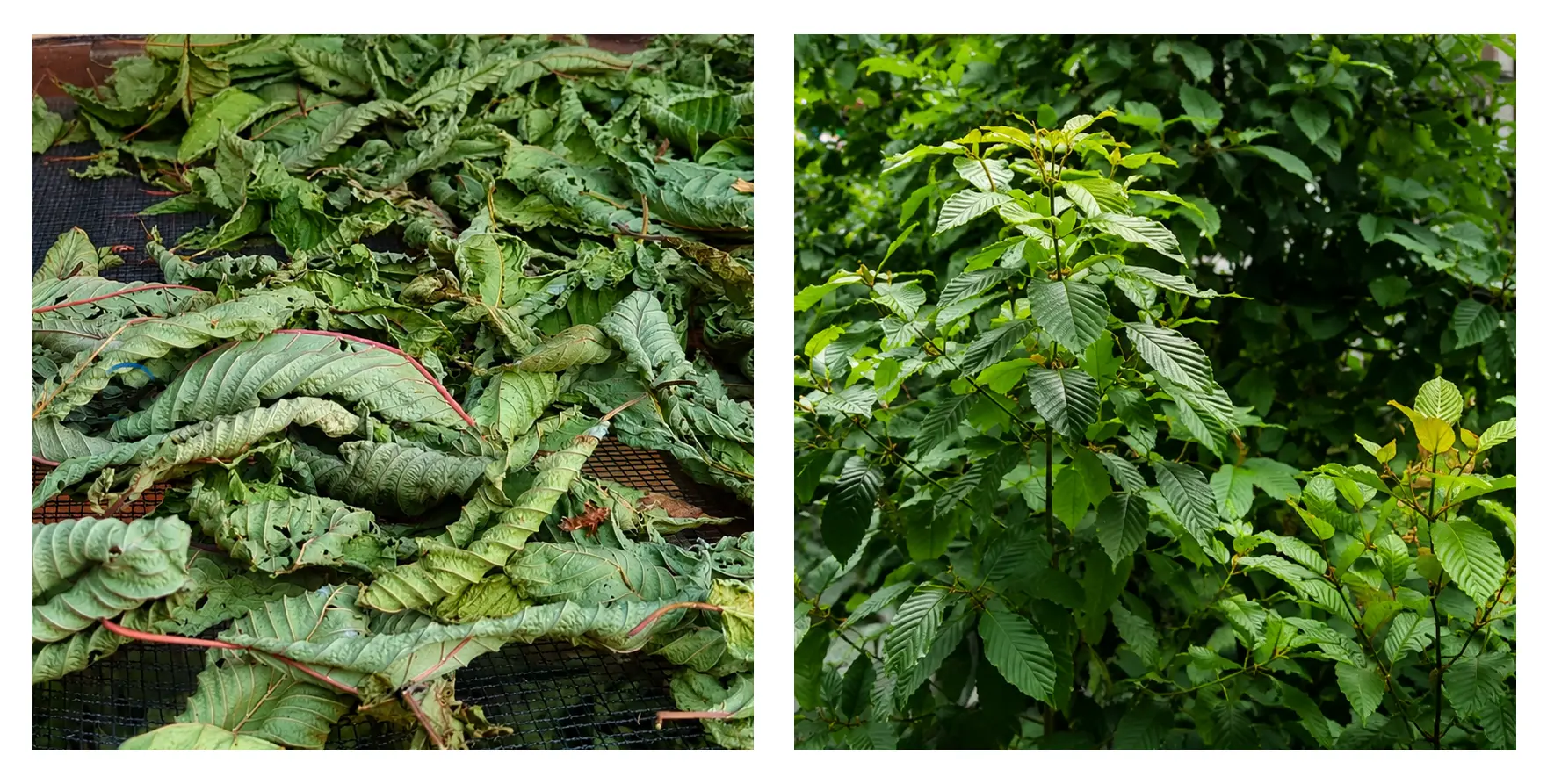
The panel on the COA tells you what was measured. The supplier's process tells you whether the result is repeatable. Ask what their standard panel covers, not just alkaloid content but heavy metals such as lead, cadmium and nickel, and microbiology including total plate count, yeast, mould and salmonella. Then ask how the leaf is dried, because drying is where most contamination is created or avoided. Off-the-ground, controlled drying keeps a batch clean; tarp and roadside drying does the opposite. A supplier who tests broadly and dries under control is managing the risk before it reaches your inspection. One who only tests alkaloids is telling you what they are not looking for.
The question that separates producers from re-baggers
Ask where and how the leaf was dried, then ask to see the microbiology and heavy-metals results for that specific lot. A producer answers both with specifics. A middleman can usually give you a number for alkaloids and nothing credible on the rest, because the drying floor was never theirs to control.
5. MOQ and pricing transparency
A professional supplier is clear about how they price and where their minimum order sits. Bulk kratom is normally priced in volume tiers: the more you commit to, the lower the per-unit cost, which is ordinary wholesale economics and nothing to be coy about. What matters is that the structure is explained openly, that the minimum order quantity is stated up front rather than revealed after you are invested, and that a first order does not force you to commit to a full container before you have seen the material. A supplier who dodges the MOQ question, or whose price shifts each time you ask, is a supplier whose numbers you cannot plan around. You can see how the tier concept plays out across the market in our guide to what bulk kratom really costs, and how we structure producer-direct wholesale from a low entry threshold.
6. EU paperwork and customs competence
A supplier can grow flawless leaf and still sink your shipment at the border if they do not understand European import mechanics. Kratom moves into the EU as a botanical specimen, with HS codes, a "not for human consumption" declaration on the customs paperwork, and labelling norms that vary by destination market. A supplier who has shipped to Europe for years handles this without drama. One who guesses will produce documents that get your container held. Ask directly how many EU shipments they have handled, which lanes and destination countries, and who prepares the export documentation. Our overview of importing kratom into the EU sets out the framework so you can tell a competent answer from an improvised one. Regulatory status differs by country and this is general information, not legal advice, so verify the rules for your own market.
7. Responsiveness and clear communication
The softest criterion is often the most predictive. How a supplier communicates before you have paid is the best available preview of how they will communicate when something goes wrong. Do they answer technical questions precisely, in a language you both work in, without vanishing for a week between replies? Do they send the COA and the sample without three follow-ups? A supplier who is slow, vague or evasive during courtship does not become attentive after your transfer clears. Clear, prompt, specific communication is not a nicety in this trade, it is the difference between a problem you solve in a day and one that becomes a loss.
| Criterion | Low-risk supplier | Walk-away signal |
|---|---|---|
| Origin | Producer-direct, describes own facility | Cannot say where the leaf is dried |
| COA | Per lot, accredited lab, current date | One generic PDF for every order |
| Traceability | Batch number, farm to pallet, no re-bagging | Pooled and re-bagged collector leaf |
| Contamination | Heavy metals plus microbiology, controlled drying | Alkaloids only, tarp or roadside drying |
| Pricing | Clear volume tiers, MOQ stated up front | Price shifts, MOQ hidden until you commit |
| EU trade | Years of EU shipments, prepares own docs | Guesses at customs, paperwork gaps |
| Communication | Prompt, precise, specific | Slow, vague, evasive |
Producer vs trader-aggregator: the short version
Most of the checklist collapses into one distinction. A producer owns the process end to end and is therefore accountable for it. A trader-aggregator sits between you and the process, which means every quality question you ask is really a question about someone they cannot fully control. That does not make every trader dishonest, but it does make them structurally less able to guarantee what you are buying, and it usually adds a margin layer without adding accountability. The full economic case, why buying direct changes your cost base and your risk at the same time, is its own subject, and we have written it up in producer or broker, what buying direct changes. For the purpose of choosing a supplier, treat producer-direct as the default low-risk option and put the burden on any intermediary to prove they add something you cannot get closer to the source.
Red flags to walk away from
Some signals are worse than a weak answer, they are reasons to end the conversation. Three come up repeatedly.
Recycled COAs, or "paperwork theatre"
The most common deception in this trade is the reused certificate: one clean COA, often months or years old, sent for every order regardless of what actually ships. It looks like diligence and functions as camouflage. If the certificate is not dated close to your lot, does not carry a batch number that matches your shipment, or comes from an unnamed or non-accredited lab, treat it as no test at all. A supplier who cannot produce a fresh, lot-specific COA on request is either not testing or hiding what the test shows.
Prepayment pressure, scams and ghosting
Full prepayment demanded for a first order from an unknown supplier, combined with reluctance to send samples or references, is the classic setup for a loss. So is a contact who is warm and fast until the invoice, then slow or silent afterward. Legitimate suppliers understand that a new buyer needs to verify before committing capital, and they will support a sample-and-COA trial rather than pushing you to wire for a container sight unseen.
Adulteration
Blending non-kratom ground leaf into a batch to add weight is adulteration, and it is banned under Indonesian export regulation. It is also invisible without testing, which is exactly why a lot-specific COA and verifiable traceability matter so much. A supplier who resists testing, cannot explain their traceability, or offers a price that undercuts the market by an implausible margin, may be selling you something that is not entirely what the label says.
A useful rule
If a supplier is reluctant to send a paid sample with a current, lot-specific COA before you place a bulk order, you have already learned the most important thing about them. The trial is not just a product check, it is a supplier check.
How to run a supplier trial: samples plus COA
You do not verify a supplier with questions alone, you verify them with a small, structured trial before any meaningful commitment. Done well, it costs little and tells you almost everything.
- Request a paid sample of the specific material you intend to buy, not a generic showcase batch. You want to evaluate what you would actually receive, from the vein and grade you would order.
- Insist on the lot-specific COA that goes with that sample, from an accredited lab, and check that its batch number, date and panel match. Compare it against what you learned in reading a kratom COA.
- Test independently if the volume justifies it. For a first relationship, sending the sample to your own lab for heavy metals and microbiology is cheap insurance against an internal COA you cannot yet trust.
- Start with a modest first order, not a full container. A supplier who allows a smaller entry order, then tests again on that lot, is showing you the process you will rely on at scale. Compare that shipment against the sample.
- Judge the communication throughout. Response time, precision and willingness to send documents are all part of the trial, not separate from it.
A supplier who passes a trial like this has demonstrated the two things the checklist cares about: the batch is what they say it is, and they are accountable for it. That is the point at which a new supplier stops being a risk and starts being a partner. You can review the full product range before requesting a sample of the specific grade you need.
The sample is not the test. The supplier is the test, and the sample is how you run it.
Frequently asked questions
How do I choose a kratom wholesale supplier in Europe?
Vet on seven points: producer-direct sourcing, a COA per lot from an accredited lab, full traceability with no re-bagging, contamination controls, transparent pricing and MOQ, proven EU customs competence, and clear communication. Then run a paid sample-and-COA trial before committing bulk volume. A producer who clears those is the low-risk choice.
What is the difference between a producer and a broker or aggregator?
A producer grows, dries and mills the leaf and holds the batch records, so it is accountable for quality end to end. A broker or aggregator buys leaf from others and resells it, which adds a margin layer and breaks traceability. We cover the economics in detail in our producer versus broker article.
What are the biggest red flags in a bulk kratom supplier?
Recycled or generic COAs that do not match your lot, pressure for full prepayment on a first order with no samples, ghosting after payment, and prices that undercut the market implausibly, which can signal adulteration. Any of these is a reason to walk away rather than negotiate.
Should a supplier tell me their minimum order quantity and pricing up front?
Yes. A professional supplier states its MOQ before you are invested and explains its volume-tier pricing openly. Bulk kratom is normally cheaper per unit at higher volumes, which is ordinary wholesale economics. A supplier whose price shifts each time you ask, or who hides the MOQ, is one you cannot plan around.
How do I verify a kratom supplier before a large order?
Request a paid sample of the exact material with its lot-specific COA from an accredited lab, and consider testing it independently for heavy metals and microbiology. Then place a modest first order and compare the shipment against the sample. The trial checks both the product and the supplier's reliability.
Does a kratom wholesale supplier need to understand EU customs?
Very much so. Kratom enters the EU as a botanical specimen with specific HS codes, a not-for-consumption customs declaration, and labelling norms that vary by market. A supplier experienced with European lanes prevents held containers. Regulatory status differs by country, so treat this as general information and verify the rules for your own market.
Choosing a kratom wholesale supplier comes down to whether one accountable party can prove, per lot, that the material is what they say it is and can move it into Europe cleanly. Work the checklist, watch for the red flags, and let a small trial do the talking. If you want to run that trial with us, ask for a sample and a current lot COA.