
Last reviewed: June 2026 · Written by the Kratom Factory team in Putussibau.
Every serious kratom supplier will send you a COA. That is exactly the problem. A kratom COA, or certificate of analysis, has become the price of entry for looking legitimate, which means the document you receive is often paperwork theatre: one old generic PDF, forwarded to every buyer, that has nothing to do with the sacks on the pallet. An experienced buyer does not ask whether a supplier has a COA. You ask whether this certificate belongs to this lot, whether the lab that signed it is accredited, and whether the panel actually covers what fails kratom at the EU border. This guide walks through the kratom certificate of analysis the way a QA manager reads one: which tests matter, what the numbers mean, and how to tell a batch-matched certificate from a recycled prop.
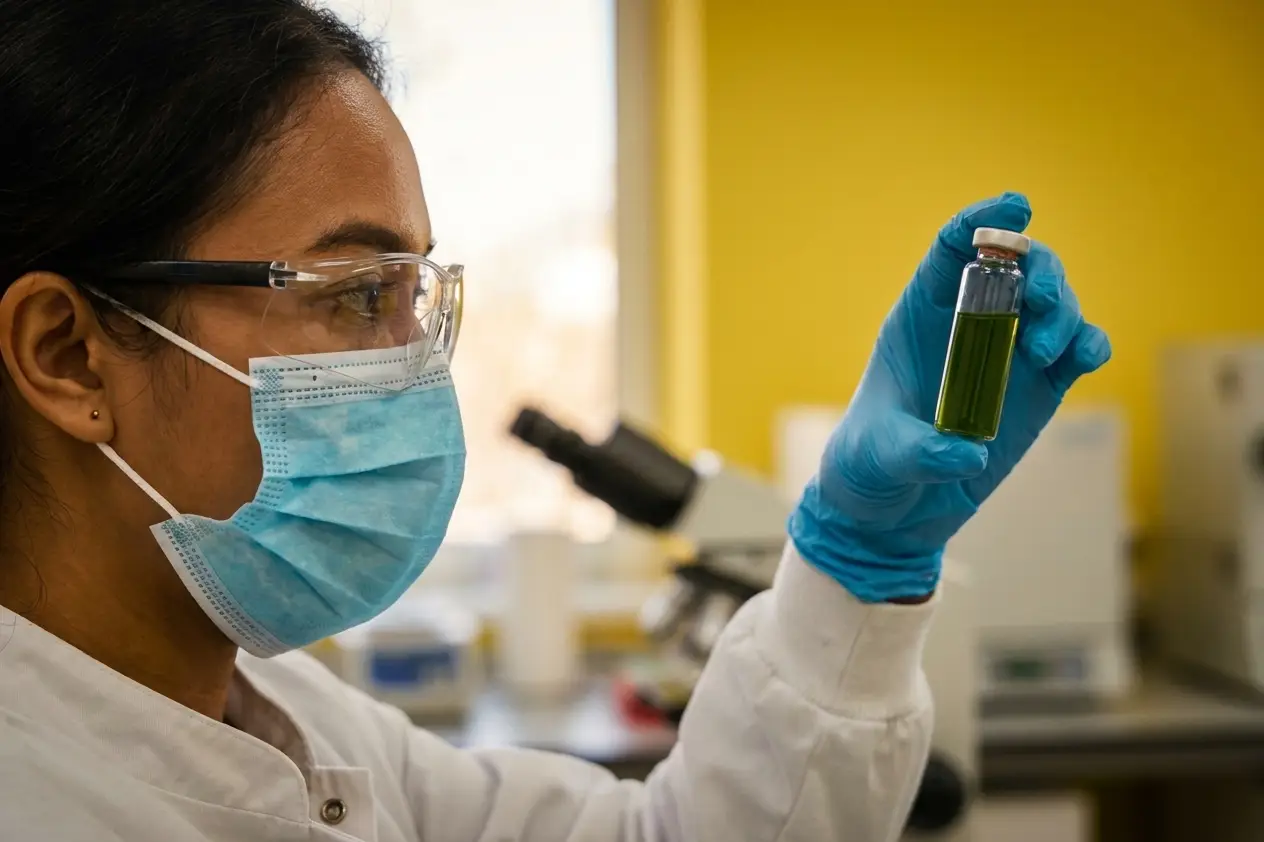
Why a COA is the bulk buyer's real safeguard
Contamination is the single biggest financial risk in a kratom purchase, and it is not hypothetical. Salmonella outbreaks have been traced back to Indonesian kratom. Because the plant bio-accumulates metals from the soil it grows in, lead and nickel turn up in leaf that was never handled badly, and mould follows any batch that was dried on open tarps through the rainy season. European importers know this, which is why most now test on arrival and refuse payment on a failed batch. If your material fails customs testing, you have already paid for freight and duty on a container you cannot sell.
The kratom COA is the instrument that moves that risk off your books before the money leaves them. A real certificate lets you verify a lot against your own market's limits before you approve dispatch, and it gives your customs broker and your downstream customers something defensible if anyone asks. That only works if the certificate is genuine and current. A recycled COA does the opposite: it gives you false confidence in material nobody actually tested. So the value of the document is entirely a function of whether it is real, which is what the rest of this guide is about. This is general commercial information and not legal advice; you should always confirm the exact limits your destination market enforces.
The core problem: paperwork theatre
"Lab tested" too often means one PDF from one flattering sample, sent with every shipment for a year. The leaf that PDF describes is long gone. A COA that is not tied to the batch number on your pallet tells you nothing about what you are actually buying.
The tests that actually matter
A credible kratom COA reports three families of tests. Alkaloid content tells you what you are selling. Heavy metals and microbiology tell you whether it is safe to sell at all. A certificate that shows only alkaloids, the number suppliers love to lead with, is quietly hiding the two panels that fail batches. Here is what a full panel includes and why each line earns its place.
| Test on the COA | What it measures | Why a bulk buyer cares |
|---|---|---|
| Mitragynine | Primary alkaloid, reported as % of dry weight | Defines the grade and consistency you resell; should sit in a stated tolerance band |
| 7-hydroxymitragynine | Minor alkaloid, trace-level | Confirms a natural profile; an implausibly high figure suggests adulteration or manipulation |
| Lead (Pb) | Heavy metal, in mg/kg or ppm | Bio-accumulates from soil; a common arrival-test failure and a hard customs limit |
| Nickel, cadmium, arsenic, mercury | Heavy metals, in mg/kg or ppm | The rest of the metals panel; all four have enforced ceilings in most EU markets |
| Salmonella | Pathogen, pass/fail per 25 g | Zero tolerance; the failure behind documented outbreaks and rejected containers |
| E. coli, total coliforms | Indicator bacteria, CFU/g | Flags faecal contamination from open-air or animal-exposed drying |
| Yeast & mould | Fungal count, CFU/g | Tarp-dried, re-wetted leaf grows mould and mycotoxins; a direct sign of poor drying |
| Total plate count | Overall microbial load, CFU/g | A general hygiene indicator across the whole handling chain |
| Moisture | Water content, % | High moisture invites microbial regrowth in transit and inflates the weight you pay for |
Alkaloid content: what you are selling
Mitragynine, reported as a percentage of dry weight, is the number that defines the grade you resell and the promise you make to your own customers. A serious producer targets a value per vein and holds it inside a tolerance band lot after lot. What you want to see on the certificate is a figure that matches the grade you ordered and that stays stable across batches, not a single headline percentage with no context. As drying and processing shift the alkaloid ratio measurably, the alkaloid line is also a quiet audit of whether the producer actually controls their drying floor.
Heavy metals: the soil problem
Mitragyna speciosa pulls metals out of the ground it grows in, so lead, nickel, cadmium, arsenic and mercury are not signs of a dirty operation on their own; they are a property of the plant and its soil. That is exactly why they must be measured per lot rather than assumed. Different farm parcels and different harvest seasons give different metal loads, so a metals result from last year's leaf tells you nothing about this year's. This is one of the strongest arguments for single-origin traceability: when a lot maps back to a known parcel, a metals result actually means something.
Microbiology: the drying problem
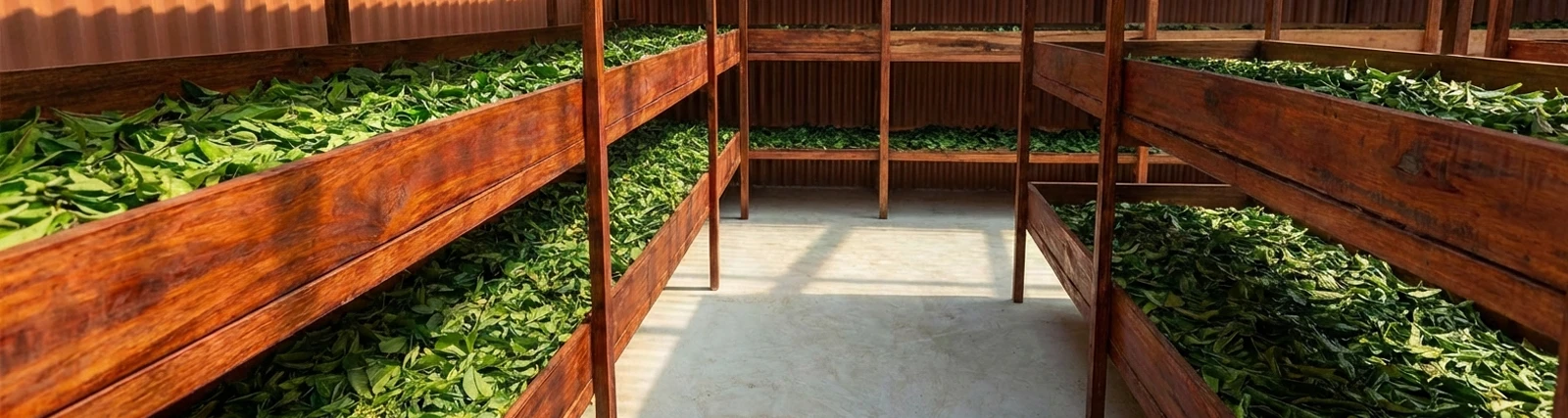
The microbiology panel is where poor handling shows up. Salmonella is a pass or fail per 25 grams with zero tolerance, and it is the failure behind the outbreaks that made importers cautious in the first place. E. coli and coliforms flag contamination from leaf dried where animals walk. Yeast, mould and total plate count reveal moisture that was never properly controlled. A COA that reports salmonella as "absent," a low mould count and a controlled plate count is describing leaf that was dried on racks under cover, not on the ground.
Read the two panels the number hides behind
If a supplier volunteers a high mitragynine figure but the certificate has no heavy-metals section and no microbiology section, that is the tell. Alkaloid content sells the leaf; metals and microbiology are what get a container rejected. A COA missing either is not a COA, it is a marketing sheet.
How to spot a recycled or generic COA
Once you know what a real panel contains, the fakes get easier to catch. A recycled COA is rarely a crude forgery; it is usually a genuine certificate from a genuine test of some batch, reused for material it has nothing to do with. The signals are structural, and you can check most of them in under a minute.
- No batch or lot number, or a lot number that does not match the marks on your sacks and packing list. This is the single clearest tell. A certificate that cannot be tied to physical goods is decoration.
- A stale sampling date. If every shipment for the past year carries a certificate dated the same week, you are looking at one test being recycled, not one test per batch.
- Alkaloids only. A page that reports mitragynine and stops there has skipped the two panels that actually fail kratom. That omission is a choice.
- No named, accredited laboratory. A real COA carries the testing lab's name, address and accreditation reference. "Tested in our own facility" with no third party attached is not verifiable.
- Round, too-clean numbers or results with no units, no limits of detection and no reference limits to compare against. Real instrument output is specific and a little messy.
- Mismatched product description, where the strain, grind or vein on the certificate is not the material you ordered.
The strongest defence is boring: ask for the COA that corresponds to your specific lot, then match its batch number against your packing documents and, ideally, against a retained sample. A supplier who tests per lot produces that document without friction. One who deflects, resends the same PDF, or promises a certificate "later" is telling you the leaf was never tested to begin with. If you want a fuller checklist for the whole relationship, our guide to choosing a kratom wholesale supplier covers what to verify beyond the paperwork.
A COA is not proof that a supplier tests. It is proof that they tested one thing, once. Only the batch number tells you whether it was your thing.
Per-lot versus per-shipment testing
This distinction decides how much a COA is worth. Testing per lot means each single-origin batch of leaf is sampled and analysed before it is blended, packed or combined with anything else. Testing per shipment means one composite sample is pulled from whatever happens to be going into the container that week, which may be several lots from several parcels mixed together. Per-shipment testing is better than nothing, but it averages away exactly the variation you care about: one hot lot of lead or one mould-heavy batch can pass a blended sample while still sitting in your pallet.
Per-lot testing costs the producer more, because it is more samples, more lab time and more paperwork. That cost is the point. It is also only possible if the producer keeps material in traceable, single-origin lots from farm parcel through to pallet, which a trader buying dried leaf from collectors simply cannot do. When a COA is genuinely tied to a lot number, per-lot testing is what makes that number meaningful. This is one of the practical differences between buying from a producer and buying from a broker.
Ask the exact question
"Do you test per lot or per shipment, and can I see the COA for the specific lot you would ship me?" The answer, and how fast it comes, tells you more than any glossy certificate. A producer with per-lot testing answers immediately. A re-bagger stalls.
How we handle testing at Kratom Factory
Because we run cultivation, our own drying and milling facility and export documentation as one operation, we test every export lot and put the COA in the box. In practice that means:
- Leaf is kept as single-origin lots with a batch number that runs from farm parcel to pallet, so a certificate can always be tied to physical goods.
- Every export lot is sampled and analysed for heavy metals, microbiology and alkaloid content before it ships, not once a year on a flattering sample.
- The COA travels with the material, matched to the batch number on the sacks, so your QA and your customs broker can verify it on arrival.
- You can request a sample COA before you commit, and match it against the lot we would actually ship you.
None of that is exotic. It is simply what a certificate is supposed to mean, and it is the difference between a document you can hand to your customer and one you have to explain away.
Frequently asked questions
What is a kratom COA?
A kratom COA, or certificate of analysis, is a lab document reporting the test results for a specific batch of leaf: alkaloid content, heavy metals and microbiology. It is a snapshot of one lot at one point in time, which is why it only means something when it is tied to the batch number on the goods you receive.
What tests should a kratom certificate of analysis include?
A full panel covers alkaloid content such as mitragynine, a heavy-metals section including lead, nickel, cadmium, arsenic and mercury, and microbiology including salmonella, E. coli, yeast and mould and total plate count. Moisture is usually reported too. A certificate showing alkaloids only has skipped the panels that fail batches.
How do I know if a kratom COA is real?
Check that it carries a batch number matching your sacks and packing list, a recent sampling date, a named accredited laboratory, and all three test families with units and reference limits. Then ask for the COA specific to your lot. A recycled certificate reuses one old test for every shipment and rarely survives a batch-number match.
Is per-lot or per-shipment testing better?
Per-lot testing analyses each single-origin batch before it is blended, so a contaminated lot cannot hide in an average. Per-shipment testing pulls one composite sample from mixed material, which can pass while a hot lot still sits in your pallet. Per-lot testing is only possible when the producer keeps traceable, single-origin lots.
Why does a supplier's own in-house test not count?
An in-house test is run and reported by the same party selling the leaf, often on uncalibrated equipment with unvalidated methods. There is no independent verification, so it is a self-graded exam. It can screen material internally, but for a COA that has to hold up at your border, only an accredited third-party result carries weight.
A COA is the most important document in a bulk kratom purchase and the easiest one to fake by simply reusing. Read it the way your customs broker will: match the batch number, check for an accredited lab, and confirm all three panels are present. If any of that is missing, the certificate is not protecting you, and you should ask to see the COA for the exact lot before anything ships.